Tuesday, December 14, 2010

10 from '10: Muzeek


For someone like me, who would gladly make a list at the drop of the hat (followed by a list of my favorite dropped hats), December truly is the most wonderful time of the year. Not because of communal outpouring of love and charity and stomach cramps and all that, but because we're at another marking period on the cultural calendar; it's time to put the artistic year in perspective, to look back upon what worked, what didn't, and what featured "and starring Cher" in the end credits. We begin with a look at this year's musical output. Now let's make one thing clear; though I'm a pretty decent singer, I can't tell a fermata from a frittata, so I'm eschewing any technical analysis when reviewing the works listed below. Instead, when choosing my 10 Favorite Albums from 2010, I looked for music that refused to let me be impartial; that, through some mixture of rhythm, melody, lyric, phrasing, production, and flat-out creative chutzpah got me out of my seat and into the game, stroking my figurative beard in deep-thought, wiping tears from eyes, or whipping my hair back and forth with youthful abandon. May this list also serve as a sizable helping of middle-finger to those who have my musical tastes pinned down to Barbra Streisand and her only equal, Barbra Streisand. I like that music them youngsters listen to as well. Plus, Barbra didn't release any new work this year.....bitches and hoes. Bitches and hoes. Anywho...

MAH TEN FAV'RIT ALBUMZ OF TWENNY TEN AH!!!:

10. Drake, Thank Me Later-Here's proof positive that you can blend hip-hop and bubblegum pop without dulling your aural edge. Thank Me Later is a rap album refreshingly free of anger and heavy-handed misogyny, one that presents its creator as a suave fly-by-nighter (the crushed-velvet synths of "Karaoke", the Prince-esque earnestness of "Find Your Love), albeit one with a dark side that rears its gloriously anarchic head in cuts like the sober-faced Nicki Minaj duet "Up All Night" and the inarguable highlight of the album, "Over", where Drake layers his partied-out paranoia over a thundering snare sample. The result is, like the rest of the album, both a product of and a good-natured jab at the world of hip-hop post-Hova."Karaoke"

9.Raya Yarbrough, December Songs-If the Raya Yarbrough that shows up on this sophomore effort isn't the stunning jazz songwriter showcased on her self-titled 2007 debut, that's a caveat I'm willing to dismiss when faced with such tremendous evidence of her skills as an ace interpreter. That silken voice soars on lushly rendered standards like "Midnight Sun" and "Have Yourself A Merry Little Christmas", and she shows off a newfound knack for cunning orchestration, placing 70's folk chestnut "River" and Danny Elfman curio "Sally's Song" in torch-ballad settings with resounding success. My advice to this burgeoning songbird: do what you're doing, only more often!
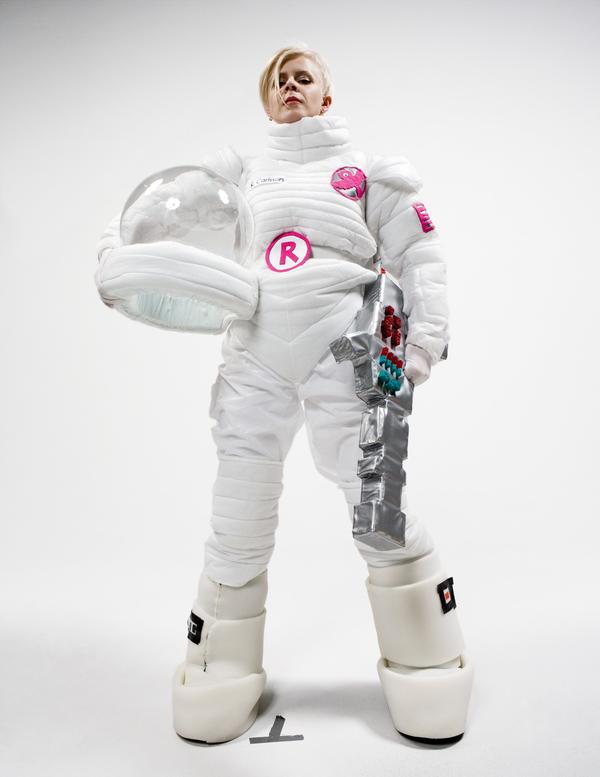
8. Robyn, Body Talk-If Stieg Larsson was Sweden's answer to Stephen King, Robyn is their resounding reply to all Americans going gaga over Gaga. All dancefloor requirements are more than satisfied; the beats are frequent and fat enough to tear through speakers, the choruses are unshakable, and every lyric is delivered in a teasing purr that all but sanctions prom-night hookups. Still, what makes the album stick is it's special dollop of darkness, the distinctly European melancholy present in spurned-sweet-pea anthems like "Dancing On My Own" and "Love Kills".

7.The National, High Violet-Unlike the above record, this is not a set of songs that begs to be blasted over a stereo. It's a sonically intoxicating set of buzzy, angular musical tone poems best appreciated when you're stewing in a dark room with your eyes closed and your headphones on (think Leonard Cohen, plugged in but mellowed out). Uberfans may fall victim to overpraise (one iTunes reviewer notes that "If a sphere were a sound, it would sound like this"....sweet life), but underestimating this consistently brilliant, wholly original group would be a much greater mistake, indeed. "Terrible Love"

6. Kanye West, My Beautiful Dark Twisted Fantasy-Separating the man from the music is damn near impossible, especially on this sprawling album, where Kanye veers with whiplash intensity from ruthless self-flagellation to boozy boasts and back again. This one lacks the tight, one-grand-slam-after-another feeling of Late Registration. However, if that was his Abbey Road, this is his White Album, a melodically adventurous, dizzingly diverse, ideologically robust, occasionally overindulgent reminder of the fact that, for all his behavior both erratic and erotic, we keep returning to his work because, in terms of flow, of force, of sheer lyrical fire, Kanye's the greatest talent in his chosen genre today; to paraphrase the album's strongest cut, "no one man should have this much power."

5. Anthony D'Amato, Down Wires-Remember what a ramshackle riot Bob Dylan's first few albums were? How the guy penetrated the patriotic put-ons of our swiftly changing country and the nooks and crannies of his own aching heart with just a guitar, a harmonica, and an abundance of vicious verbosity-and seemed to be having a hella good time doing it? Well, some of the work on this compendium of socially conscious blues-rock rave-ups ("Ballad of the Undecided" and "Never Grow Old") is so great it actually approaches that same cathartic peak of ragged, throaty energy.

4. Local Natives, Gorilla Manor-If Fleet Foxes, David Byrne and George Harrison banded together and blessed us with a musical lovechild, the result would sound something like Gorilla Manor, an ebullient hybrid of angsty indie and jubilant Afropop that, before it is anything else, is an extremely generous helping of ear-candy. Nothing dissonant, spacey, or inaccessible to be found here-the hooks are clean and catchy, the harmonies subdued and sweet, and the lyrics endearingly cheeky ("Memory tells me that these times are worth working for..."). Some albums go notoriously well with addictive substances; this one is it's own addictive substance. "Airplanes"

3. Peter Gabriel, Scratch My Back-Truly great songs sound as if they've been around forever. That was clearly the former Genesis singer's rationale when he was creating this esoteric but highly emotional collection of indie covers (Arcade Fire, Talking Heads) set to classical chamber orchestrations. The highly traditional presentation of these songs allows us to the heretofore unavailable privilege to experience Gabriel as a vocal interpreter instead of a pop performer; his voice, while not as supple as it once was, still drips with a deeply affecting mixture of vulnerability and hope, particularly in a surging version of Bon Iver's "Flume" that happens to be the only standalone track released this year that moved me to tears.

2. Aloe Blacc, Good Things-Ever since Amy Winehouse hit the charts, everyone and their cousin Vinny has been at work on a good ol' fashioned album of R&B. But Soul with a capital S is a unique quality you can't manufacture, so few of these efforts have really hit the spot. Blacc's prophetically titled debut is the exception to the rule, a traditionalist triumph that's as warm and satisfying as a plate full of soul food; wah-wah-meets-big-brass anthems like "I Need A Dollar" and "Hey Brother" would fit in effortlessly on an R&B compilation with the likes of Bill Withers and Marvin Gaye.

1. Anais Mitchell w/guests, Hadestown-If you read my blog on a regular basis, you've already seen me spill my love and my ink over Anais Mitchell's knockout concept album that re-tells the Orpheus legend against the volatile backdrop of Depression-era Lousiana. Suffice to say that Mitchell's the best songwriter of her generation, and guest artists like Ani DiFranco and Bon Iver invest her mystical, musing lyrics with every ounce of urgency they deserve. Worthy of being mentioned in the same breath as concept greats like Dark Side of the Moon and Sgt'. Pepper's, this boundary-bursting concoction is part zydeco, part folk, part rock, part soul, and all heart. Like all great albums, it takes you places. "Wedding Song"

Thursday, December 9, 2010

"Tiny" Budget, Big Dreams.


If you're a film critic, or someone who creams their pants while reading film criticism, then you wait for it eagerly, every day, often consciously, occasionally years it a time. You fork over hefty chunks of change to piercing-prone, plaid-clad ticket-takers and sandwich yourself between the padded walls of the local arthouse theaters, waiting for this rare species of movie to rear its head. And you know when it does. You know from the minute it starts. I am talking about the proverbial cinematic dark horse, that fledgling indie that you feel obliged, nay, called upon to expose to a larger audience. Guess what, kids? I gots one.
The masterpiece in question is Tiny Furniture, a riotous, gloriously gutsy home movie that sticks a couple of untrained actors in the wildest of concrete jungles and lets them tear it apart with their raw talent. It's an absolute grand slam of a debut for writer/director Lena Dunham, whose exceptional way with words allows her to work wonders on a shoestring. But this film is so conceptually solid, so ruthlessly incisive, so fiercely compassionate, and so flat-out entertaining that I wouldn't deem it hyperbole to call it a triumph for the entire indie business. It's not a game-changer in any way, shape, or form, but it is a thrillingly accurate examination of the intricacies of human behavior, and as such, comes off as both of its time and timeless.

This one's about Aura (Lena Dunham), freshly graduated from Oberlin and slinking back home with only a film degree and a string of much-mocked YouTube videos to her name. At once intimidated and infuriated by her two remaining family members-chronically aloof earth-mother Siri (Laurie Simmons), and sister Nadine (Grace Dunham), a world-class poet who hates poetry-she seeks solace, or at least easy diversion, in a trio of fellow early-middle-aged rolling stones.
There's Jed (Alex Karpovsky), one of Aura's YouTube peers who's struck gold with a whacked-out performance art series called "Nietzschian Cowboy". There's Keith (David Call), an erudite local chef whose obsessions are Vicodin, casual sex, and Cormac McCarthy, in that order. And finally, her old friend Charlotte, a trampy European import who serves as both a frequently-bare shoulder to cry on and the dispenser of claws-out bons mots bitchy enough to give Regina George an O-face. Cheered on by Charlotte, Aura goes to work on seducing Keith...that is, until she lets Jed move in with her family as a favor. Love triangle? I think so.
Hardened cinephiles are rolling their eyes right about now. Based on the above summary, you'd expect the picture to go one of two ways. It could be A) a paint-by-the-numbers rom-com with a deficit of wit and a surplus of pop songs or B) a cloyingly pretentious, artier-than-thou indie that assembles soft-spoken hipsters and then sets them off on immaculately photographed bouts of mental masturbation.
Lucky for us, it's neither. It's a special breed all it's own- a wonderfully unique dramedy with all the endearing drollery of a Preston Surges movie, a generous helping of Allen-esque existential angst, and a dash of the feed-'em-to-the-dogs ruthlessness of recent minor classics like Heathers and Election. For a relative n00b in the director's chair, Dunham has an uncanny mastery of balance; she can do Tina Fey-worthy one-liners ("Hello. You look like the epilogue of Felicity"), and proves an expert assembler of knockout comic setpieces (by far the funniest "animal-in-the-house" episode since that Buick-sized spider in Annie Hall), but her real strengths lies in knowing that, while those features make a movie memorable, they do not make it good.

What's needed, even more than a story, are characters you can get behind. Just ask Jim Jarmusch or Jerry Seinfeld, strikingly diverse artists who forged highly successful careers by dropping strikingly original personalities into bare-bones plotlines. Here, Dunham's work suggests she could be a fellow Master of Nothing. Notice how, when summarizing the film, I included very few major plot points-there are really only four or five. What I spent alot of time on are the people, creations that pop with a real-life immediacy that gets rarer and rarer every movie season.
Dunham understands that people, by their nature, are contradictory, and conveys a sense of the human condition's frailty by establishing character traits until these people fly in the face of them. Nadine appears to be a stuck-up ubersnob, until she proffers an unexpectedly sweet response to something Aura says. We've put Jed in the sweet-but-scruffy category until the screenplay makes a daring decision involving his screen presence. And then there's Siri, who, after spending the entire movie in a state of out-to-lunch apathy, steps into the spotlight for a deeply haunting closing monologue that ends the proceedings on a note of mournful understanding and hard-earned wisdom. I don't need to analyze these scenes anymore. They stand alone. When you see the movie, they speak for themselves, and, more importantly, they speak to you.

So why do I like this movie so much? Why am I campaigning for it like few other indie pieces I've seen? Probably because it does something I've wanted the cinema to do for a good while. The Graduate was a perfect account of the 60's generation, of the between-this-and-that ennui that drove so many to turn on and drop out. On the threshold of maturity, they saw infinity roll out before them. They had all the time in the world but yet not concrete ambitions to fill it with. After the attack-and-natural-disaster prone 90's and 00's, something changed, I think.
The uncertainty was still there, but we gained a newfound urge to fill our time as much as possible-to take up X amount of jobs, X amount of AP classes, to apply to this many colleges, try this many things with that many lovers, explore all we wanted and latch onto some purpose in case the increasing random whims of the world wiped us away tomorrow. Instead of standing in buzzy bliss before the endlessness of time, we felt at its mercy. This movie captures that newfound restlessness with biting exactitude, especially in its beautiful final line. The Graduate is one of my all-time favorites, so a movie that may be the new-millennium equivalent of that tour de force certainly deserves my attention and unchecked praise.
One final screed: some are discounting Lena Dunham's efforts because the picture's based on her real life experiences-she's an Oberlin film grad, the picture was shot in her actual loft, and her real life mother and sister play her movie family-but I find it absurd that the picture's autobiographical nature is being tallied as a negative. It takes balls to put any fragment of your past up on screen, and we ought to praise Dunham for putting it on display for the sake of her art. But it doesn't matter whether this movie is real or fake, half-imagined or completely facutal; it's something better than any of the aforementioned qualities; honest. A.
PS. For those who won't bother to see the picture (it's available on cable On Demand, and headed to DVD-store shelves), I can't resist sharing my favorite line;
Partygoer: "I love your dress!"
Lena: "I think it screams 'I've been living in Ohio for four years, now take me back to your gross apartment and have sex with me!'....but....uh....thank you...."


Wednesday, November 24, 2010

Something Middling This Way Comes


As you know, I’m an avid supporter of indie film. Thus, I decided it appropriate to devote an entire post to one of the most underpublicized releases in many a moon, Harry Potter and the Deathly Hallows, Part I. But first, let’s wander down memory lane and examine its highly underrated predecessors, box-office flops all. Keep in mind that I’m wearing my movie critic cap at the moment, not my Hoggy-Hoggy-Hogwarts lovin’ Sorting Hat. For example, I can’t deny that the Prisoner of Azkaban movie spliced many a beloved scene, but it’d be downright unfair if I didn’t extol its expert manipulation of mood and impressively mature performances. In short, I’m reviewing what the filmmakers left in, not what they cut out. So, without further ado-

Sorcerer’s Stone-In hindsight, it’s clear that the Potter phenom was only in its infancy when this one hit theaters; that’s probably why this one gives off a faint whiff of flop sweat and lacks the distinctive stylistic sizzle that a Gilliam or Spielberg could’ve lent to the proceedings. This is a tasteful, harmless, gently involving example of paint-by-the-numbers adaptation that pleases all viewers without seriously alienating or truly exhilarating any. B.

Chamber of Secrets-Ah, here we have it, the nadir of the series, a padded, plodding mess that oscillates jerkily between kid-courting whimsy and watch-through-your-fingers violence. It’s the weakest of Rowling’s books, but at least in the novel our blazingly active imaginations could fill in the gaps between the words. Here, what you see is what you get, and what you get is a trio of kids fighting losing battles with puberty and shockingly tacky CGI spiders. There are exactly two saving graces; Kenneth Branagh’s Gilderoy Lockhart, who sets the screen on fire with his unchecked flamboyance, and Richard Harris, whose radiant Dumbledore is great and greatly missed. C.

Prisoner of Azkaban-Alfonso Cuaron does away with the reverential tone of the first two installments, forging a beguilingly bizarre wild ride that thrills even when it skids off the rails every now and then (two words: Knight. Bus.) An essential document of three budding actors blossoming and taking control of the screen, this movie works at a fundamental level on which the first two don’t; indeed, as Harry soars over the grounds of Hogwarts, guided by the wings of Buckbeak and his own swiftly maturing heart, the film series at last captures the ineffable, overwhelming emotional majesty of the books. A-.

Goblet of Fire-Four Weddings and A Funeral proved that Mike Newell got relationships, and he stakes his claim yet again in film numero quatro, deftly handling the romantic roundelays as our heroes experience the first surges of hormonal electricity. He also puts on his action director pants with stunning results; the three Triwizard scenes come off as both exquisitely intricate setpieces and spontaneous explosions of sound and fury. Best of all is Voldemort’s resurrection scene; perhaps the most important sequence in the entire octet, it’s transferred to the screen with all of the dread, awe, and deep, deep sorrow intact. A great book and a very good movie. B+.

Order of the Phoenix-David Yates, who never directed a major studio movie prior to this run, hits the ground running with this breathtaking fifth film. Imelda Staunton and the marvelously malicious Helena Bonham Carter are welcome additions to the cast, and the standby’s carry out their ever-expanding duties flawlessly. The memorable scenes are endless; the Dementor attack, the gathering at Grimwald place, the first class with Umbridge, Harry’s first kiss, Fred and George’s attack, the final duel….Yates orchestrates them all with an eye for detail and a knack for emotional and structural fluidity. A current of true, potent magic flows through this, the best film of the series thus far. A.

Half-Blood Prince-Another expert distillation of what makes Rowling’s books great. More emotional than most melodramas and packed with twice the humour of anything Adam Sandler’s ever made, HBP has it all. By this point in the series, cast and crew alike are so all so good that their work appears to be entirely second nature to them. A decidedly satisfying installment that endears us to these characters more than ever while priming us for what lies ahead….A-.

Harry Potter and the Deathly Hallows-Part I


When it comes to this one, the beginning of the end for one of cinema's most consistently satisfying and mind-bogglingly lucrative franchises, don't believe the hype. By that same token, don't believe the hate. Contrary to the hyperbole perpetrated by the ramped-up Rita Skeeters of film criticism, Deathly Hallows isn't David Yates's career-crowning Empire Strikes Back, but it isn't a horsemen of the cinematic apocalypse out to Hoover-maneuver your hard-earned dough, either. It packs the visceral wallop you'd expect from a finale ultimo, but it lacks the structural fluidity of its two Yates predecessors. Exceedingly exciting setpieces are sandwiched between messily directed scenes that either serve no purpose, or, worse, are flat-out detrimental to the story's momentum. Here's a movie that manufactures wonder after million-dollar wonder, then seems to do its damnedest to undercut it's own successes. Part I is equal parts exhilarating and exasperating, a magical mixed bag, a beautifully designed, emotionally charged mess. If you're turned off by the contradictions in the above sentence, prep yo' ass; this review will be full of them.

The plot sounds deceptively simple, though readers of the book know it to be a study in epic complexity. In short, we have Harry, Ron, and Hermione scouring Europe in search of seven Horcruxes, pieces of Voldemort's soul that most be destroyed before they can kill off aforementioned noseless Nazi. As their search dovetails into a hunt for the titular objects, whose owners can reign over immortality itself, exhaustion, fear, and petty jealousy take hold of our heroes, and their friendship, not to mention the fate of the magical world, stands on the edge of a knife...

Sounds positively Middle-Earthian, doesn't it? But unlike Rowling's detractors, I don't see Hallows resemblance to the Rings trilogy as a negative. Great epic literature, from The Odyssey to the Bible to The Road, hinges on the Journey. Sending characters out into the elements is the ultimate test of our love for them and their love of each other, and I applaud Rowling's decision to follow this tried and true tradition. It's not just Harry vs. Voldemort in book seven-it's Harry vs. the World. Yates's failure to understand this crucial piece of information becomes the picture’s Achilles heel. There’ll be plenty of praise for the movie at the end of this review, but steel yourself, Mr. Potter-you're getting torn to pieces in the next few paragraphs.

Those of you who've read the book know that, like all of the Potter novels (hell, all novels), it is flawed. Rowling never writes a boring sentence, but she has a frustrating habit of including wonderfully written, memorable scenes that do nothing to advance plot or deepen character-take a look at the endless descriptions of food in Sorcerer’s or the Deathday Party in Secrets and you’ll see what I mean. In Hallows, she flounders briefly by including implications of a Harry-Hermione almost-romance and a spitefully jealous Ron. By this point in the canon, both Ron and Hermione are sure enough of their feelings for each other (as is Harry of his attraction to Ginny) that such soap-opera drama comes off as little more than glorified dilly-dallying. It slows down the train-off-the-tracks pacing that’s necessary for a successful race to the finish.

Luckily, Rowling only wastes a few pages on this pointless peccadillo of a subplot. Yates and screenwriter Steve Kloves all but make it the heart of the film. This installment starts with a slam-bang opening act-highlights include a profoundly affecting prologue, a white-knuckle wand-duel/dog-fight hybrid, and one of the coolest standalone action sequences in the series, a sort of magical Mission: Impossible break-in. Then, in the middle, it just sort of stops. Our heroes are in a forest, and they sit there. And sit there. And mope. Harry and Hermione flirt. Ron becomes sullen. Hell, emo. The threesome get in an argument that feels so obligatory and blatantly manipulative that you wonder if George Lucas wrote the dialogue on the sly. This whole exercise in lavish stupidity peaks as Ron suffers a hallucination of Harry and Hermione making out in the nude. As I watched the needless display of flesh, the horridly choreographed ballet of brooding and sexual ennui, I felt as if I were viewing an entry in the Twilight series. Why Yates would try to emulate a decidedly lesser franchise is beyond me, as is whether he did so intentionally, but I could bitch-slap him for his decision to expand the book’s flimsiest plot-point in an attempt to satiate the Drooling Over Daniel crowd.

He’s a better director than that.

These are better movies.

The other problem was perhaps unavoidable, but is noticeable all the same. Watching the last couple of entries in the series, readers of the novels probably noticed the missing plot points piling up like names in the Goblet of Fire. “This information is absolutely essential….how will they reveal it?”, we thought to ourselves. The answer? Very awkwardly. All the magic-babble snipped from the previous pictures pops up here, with such frequency and speed that non-readers will probably contract migraines within the first half hour. Characters such as Rufus Scrimgeour and Mundungus Fletcher, introduced earlier in the novels, appear for the first and last time here, receiving so little screen time that they come off not so much as people but as walking pieces of exposition. In a way, Part I is this series’ Personal Jesus, suffering for the structural sins of its predecessors and saving Part II from the hell of excess explanation.

And yet, for all its considerable issues, I ultimate left the theatre satisfied and hungry for more, for several reasons. Firstly, there are the performances, which continue to get better and better; the adult ensemble is stronger than ever, and even when saddled with clunky dialogue, Radcliffe, Grint, and Watson shine, and will continue to soar when interpreting the even more demanding material of the story’s final half. Alexandre Desplat contributes a commendably propulsive score, and Eduardo Serra lends a grimly immersive European palette to the visuals. Scribe Steve Kloves continues to astound in his effortless blending of the enchanted and ordinary world (a well-known Nick Cave song comes on and fits right in).

Best of all, in an ironic twist, while the picture botches some of the most movie-ready scenes in the series, it captures wonderfully an element of the novel that I was dead certain would be lost in translation; the anything-can-happen trepidation that hangs over the story like a mourner’s veil. After Dumbledore’s death in part six, we are left with the distinct impress that no one and nothing is safe. There are evil people, there are ruthless people, and there are good people who will die for no reason. I feared that, after a PG-rated Half-Blood Prince, Yates might step away from the frankness needed for the final part of this story. But Hallows skimps on nothing. From its chilling evocation of the new Totalitarian ministry to its blood-curdling scenes of torture and abuse to the frequent mentions of the dead, dying, or missing, this installment stakes the odds high and mighty against our heroes, and is thus the perfect set-up for what’s sure to be a slam-bang final film. Notice I said perfect set-up. By no means is Deathly Hallows a perfect movie. Still, that unique Potter magic isn’t gone. It’s just sporadic. I expect it to be back and better than ever eight months for now, when this saga of ambition, emotion and sky-high receipts comes to one helluva close. B-.

Saturday, November 6, 2010

It Don't Worry Me...

NASHVILLE

Nashville is not the best written film of all time, but it is perhaps the most successful at convincing us that it is not written. Here's a movie bursting at the seams with over 30 characters and jam-packed with at least ten full-length musical performances and almost three hours in length. But yet each individual moment seems startlingly spontaneous; every action these people take seems like an extension of their gloriously idiosyncratic personas instead of a function of the screenwriter's sweaty-palmed desire to move the story along. You'd think Robert Altman's pitiless, perceptive Polaroid of red-state, post-Watergate America would've aged like cheap milk, but, as with many immortal works of art, this one finds astonishing universality in its specificity.
The plot? Non-existent. There's a presidential convention going on in Nashville, and the camera weaves in and out of concert mobs, plants itself in the back of smoke-choked bars, lurks in the corners of sad little hotel rooms and houses, giving us brief, biting vignettes of the people who happen to be in town at the time and what they're up to. Scenes flash past with blink-and-you'll-miss-it brevity-a gospel singer (Lily Tomlin) converses with her deaf son, a whacked-out patriot (Henry Gibson) labors over the production of a trite bicentennial tribute, a gaga BBC reporter (Geraldine Chaplin) ambles around a junkyard mumbling gibberish into her tape recorder, an Opry starlet (Ronee Blake, best in show) has an onstage meltdown and so on. And, thank god, in no way do all these little pieces add up to some soppy sobriquet about how We're All Really The Same (o hai, Crash!)

Of course, infinite praise is due Joan Tewkesbury's screenplay, a marvel of structural ingenuity. It show us the struggles of these sad, strange individuals while addressing the problems that plague our country at large. The storytelling here doesn't mask the social commentary; it is the social commentary. One of my favorite moments in the picture comes at the beginning of songstress Connie White's (Karen Black) Opry performance. Working the crowd, she gives an autograph and a photo-op to a young boy flanking the stage. "Study real hard!", she proclaims, "You can be the next president!" But her ad-lib flops; there's a smattering of golf-clapping and then a moment of devastating silence before she launches into her first song. Within about half-a-minute, Tewkesbury has planted two questions in our head. First of all, what place do Connie and her music-patriotic to the hilt-have in an age of irony and countercultural sprawl? But just after our heart breaks for her, a second thought comes to mind: What's wrong with our country when the phrase "You can be the next president" seems more like a threat than a compliment? Moments like this one abound in Nashville. You find yourself in a pleasant predicament; you want to run out of the theater now now now and discuss these pearls of wisdom with everyone, but you also hope the picture will run forever, will keep getting at more and more of what makes America American and humans all too human.
The other unique aspect of the script is rather sad; it is, to this day, one of the only major Hollywood classics penned by a woman. As such, the film's portrayal of American women is deeper, angrier, and more honest than most any other. Roger Ebert says it best; "They are prized for their talent, their beauty, their services in bed, but never once in this movie for themselves." Tewkesbury gets at a sad truth here. It's not that men don't praise women; even worse, we praise them for the wrong things. We extol their looks, skills, and sensual prowess so often that some of them begin to think those are the only aspects worth improving. Look at Sueleen (Gwen Welles), a talentless singer who hits paydirt because she's willing to strip when she sings. Or Martha (Shelley Duvall), whose all-consuming desire for physical intimacy sidetracks her journey to the sickbed of a dying relative. Or, for Tewkesbury's most piercing evocation of sexual cruelty, watch the film's most famous scene-insolent but ingenious folk-rocker Tom Frank (Keith Carradine) serenades a bar full of women. He has slept with all of them. He loves none of them. They have come because they believe that after the show, he might, just might, take them home. By objectifying their appearances and tuning out their personalities, he has created in them a want that can neither be fulfilled nor forgotten.

If the script's the tinder, Robert Altman's the match. Ah, the Altman Style, perhaps the most distinctive directorial touch in movie history! Not only would he encourage his actors to riff on the written dialogue (causing many a screenwriter many a conniption), but he'd often station the characters (and his camera) in the midst of a crowd, then encourage extras and ensemble members to have in-depth conversations of their own-and talk over the leads! By refusing to a) provide meat-and-potatoes plot-pusher dialogue or b) hone in on one particular exchange, Altman makes you work. You must listen up, you must choose what's important and why. You can watch Nasvhille three or four or five times and focus on different strands of conversation, different people on the fringes of the frame. By broadening the soundtrack and the shot angles, Altman brilliantly refutes the moronic-but-abiding notion that a movie must mean the one thing to all people. The picture is a Homeric odyssey, with you as Odysseus; each viewer has an individual journey, as opposed to the conventional group experience. You know I like a movie that believes in its audience. This picture is one giant cinematic trust fall.
Now that I've devoted a full paragraph of idolatry to Altman, it's time I turned my attention to the cast. Students of performance would be wise to check this one out. I don't know what combination of written word and internal choice was involved, but here are thespians entirely devoid of vanity. Take Blake's work, for example. The role of a country diva collapsing under the enormity of her self-sustained legend offers enormous showboating potential. Instead, as a disturbed person would be more likely to do, she plays her character with the frenzied desperation of someone trying to pass as sane, and when she does lapse into delirium, it is petty and pathetic. There are myriad examples of such note-perfect realism here-by staying true to even the ugliest impulse, these actors endear us to their characters twice as much as if they'd attempt to make them "sympathetic". Appropriate for this tough-love classic, a timeless portrait of tortured souls caught in the sometimes treacherous, sometimes triumphant act of surprising themselves-and us.

Oh, and one more thing. During the making of Nashville, one of the great apocryphal stories of cinematic folklore was born. As Altman geared up to shoot the final scene, he was over-budget, over-drugged, and caught in the midst of a brewing storm. At the end of his rope, he shut off the camera, stretched out his arms, and yelled "STOP RAINING!". The rain, knowing a great director when it heard one, did just that. Or so the story goes.

Saturday, October 23, 2010

Pain, fame, and Mrs. Norman Maine

Ohai. I wrote about a movie this week. But first...like what I've done with the place? Make sure to check out the Simply Streisand fanpage, the "Weekly Sanging" showcase, and, of course, the badass new logo.

Anywho....

A STAR IS BORN

In the cinema you'll find two types of legitimate tearjerkers (and by legitimate I mean those that don't feature the words "adapted from a novel by Nicholas Sparks" in the credits). One breed is the Realist Wrencher, where characters are placed in circumstances so harrowing and close-to-the-bone that we spill over with fear and gratitude all at once; I'm thinking The Deer Hunter,Schindler's List, etc. Then there's the Tinseltown Tragedy. You know what I'm talkin' 'bout-those old Hollywood lulus where the even the most miserable moment is orchestrated with such sprawling grandeur that you can't help but feel ecstatic, even as you blink back tears. Hearts are worn on multi-million dollar sleeves and bleed onto the screen in spectacular Technicolor. And in the realm of enrapturing, exquisite old Hollywood melodrama, A Star Is Born reigns paramount.
The picture is a remake of an already-cliched original, but the embarrassment of technical expertise and top-line talent brushes off all the old bromides and makes them shine anew. No warm-up for this puppy; we begin with one of the most opulent sequences in the decidedly ostentatious culture of old Hollywood. A gala for the stars. An army of flashbulbs, waving hands, craning heads. An auditorium that seats thousands, dressed to the nines. The wavy red curtains part. A massive orchestra rolls in on a giant setpiece. Everyone's ready for the much-touted appearance of renowned actor Norman Maine (James Mason)...except Maine himself, who's drunk as a skunk backstage. When he stumbles onstage clearly hammered in the middle of crooner Esther Blodgett's (Judy Garland) opening set, Blodgett integrates him into the act without missing a beat-ah, he's only playing drunk!-thus saving his reputation. Thus begins Maine's one-man mission to turn Blodgett into the next big thing. It's no surprise they fall in love along the way. Not so anticipated is that, while Esther begins her climb towards transcendent stardom, Norman's life begins to fall apart before his very eyes...
Oh, I'm sorry, were you looking for subtlety? Ingmar Bergman's got a whole shelf for you to check out. This one's all about the grand gesture. The charm of Old Hollywood cinema was its frankness, its what-you-see-is-what-you-get purity. Take that opening scene for example. In our age of cyber-cynicism, we'd probably get a couple jabs at the vanity of celeb life, punctuated with some half-hearted attempts at symbolism; in short, everyone involved would be very keen on exposing the rotting core beneath the glam-bang facade. But here, there is no "real point"; we begin at a premiere, instead of a cafe or a garden or just a regular nightclub perf, because it gives director George Cukor and co. the opportunity to stage a real jaw-dropper of a crowd scene. From the moment we follow that spotlight down into the midst of the crowd, we're gone. There isn't a moment in this picture not designed to stick firmly in the memory. The result is an exceedingly fervent feeling f incredulous rapture as we realize that for every trick pulled out of the bag, there're a dozen more of greater scope and sublimity.
Take Norman and Esther's meet-cute, for example. Backstage after her number, Esther's all in a tizzy. "Why is Norman Maine still in pictures?", she huffs. "You know, I ask myself that every morning." The camera pulls back. Norman is standing there, amused smile on his face. He palms her lipstick. Scrawls a heart on the backstage wall. Scribbles their initials inside. He asks her out. She turns him down, but offers a hint of hope in a gem of a line: "Maybe tomorrow night or the next night. I'll tell you what I'll do. I'll lay out a whole supply of lipsticks, and we'll celebrate all over the place." A wry smile and then goodnight.
Today, you'd likely see a scene like this saved for the final act, plopped in before the credits roll to redeem middling material. Here, Cukor is so confident in the wonders to follow that he gives us this little miracle in the first ten minutes. And this in a three-hour picture! Cukor's confidence makes sense though; we don't know it, but he's aware that among the things in store are a glorious nightclub scene; an exciting excursion to the big city; a touching marriage proposal; a twenty minute jazz medley giving the inexhaustible Garland her due; and a heart-tugging ending to end all heart-tugging endings. Rare is a movie with a true trump card; even rarer is one with a full deck.
And then there's the score, which kicks in when the ever-present drama is at its peak, knocks the picture into exhilarating overdrive. In original studio musicals, too often the music serves as pleasant augmentation, nothing more; I love Easter Parade and Gigi as much as the next guy, but beyond the one or two signature numbers, the rest of their musical numbers serve as little more than B-grade balls for A-grade talent to knock out of the park. Here, every individual song is a winner. "Gotta Have Me Go With You." "The Man That Got Away." "It's A New World." "My Melancholy Baby." "You Took Advantage of Me." "Lose That Long Face." "Swanee." If these songs weren't already standards from radio play prior to the picture, they all are now. The music-and-lyrics team was one-of-a-kind-the dreamy decadence of Harold Arlen coupled with the winning wordplay of Ira Gershwin produced rapturous results, and if they songs smart on their own, they fairly smolder when Garland wraps them in the gilded glory of her euphoric tremolo.
Ah, so now we arrive at Garland, the reason this picture works. I say this at no discredit to Mason, who breaks your heart time again with his blithe yet brutal self-serration. But the fact of the matter is that it's our knowledge of Judy's prior career that made this film stick upon its release, and the particulars of her sad final years that allow it to age so peerlessly.
Let's leap ahead in time. 1976. A Star is Born is remade with none other than God herself, Barbra Joan Streisand, and Kris Kristofferson. This movie should've worked. The score's fairly strong, with multiple opportunities for that Streisand voice to really tear into it, the script is better than it was given credit for, and both the crowd scenes and the one-on-one dialogues are expertly photographed. Yet we can't really get into it all. The same goes for 1937 drama on which this one was based; Janet Gaynor does her damnedest, but it comes off as passable entertainment now, nothing more.
Let's think about this. Streisand had three hit albums, a Grammy, a Tony, and an Oscar all before age 25, and has spent the 40-odd years since releasing albums met with either critical acclaim or audience approval or both. Gaynor was the first winner of the Best Actress Oscar, carried a successful marriage, and had such a reputation for excellence across the board that she was often given the opportunity to pick her roles carte blanche. Now look at Garland. Around the time this picture was made, she was fresh off another in a series of suicide attempts. She was gaining weight rapidly. MGM had unceremoniously kicked her to the curb. Her mother was slandering her in the press. Everyone loved Judy, and wanted to see her beat the odds. They wanted to see her shine brighter than ever before. They wanted her-and, by extension, Esther Blodgett-to be happy. Moss Hart's screenplay cannily played on this national desire, drawing frequent parallels to Garland's stage roots, her famous vulnerability, her perfectionist persona. Esther's drive to succeed dovetailed with America's deep need to see their songbird soar again. Moreover, the madness and misery of the previous years had left Garland desperate for an outlet, one she clearly found in the character. Her Esther is nakedly ambitious, nervously witty, quietly hurting-one of the great 20th century screen creations, a startlingly incisive portrait that pokes holes in Gaynor and Streisand's vanity turns. How did she ever lose that Oscar?!
Today, Garland's unique presence aids the film in another way. As we all know, Garland's shining star was soon to be snuffed out-she overdosed on barbiturates at age 47. It was an ugly death, a tragic death, one that left a gaping hole in the fabric of our popular culture. It's a hole that still remains. Before she was an actress or singer, Judy was an Entertainer with a capital E-a woman with an electric presence who threw herself at us with such giddy force-of-will that we had no choice but to forget our troubles and join her for the ride. With Streisand, you're bowled over by every little detail of her exquisite interpretations; Garland made you forget the details altogether, went straight for the jugular.
We've never had an entertainer like her, and as such, the loss still stings. But this film is around to offer some salve. For three hours, Garland is up there, threatened by the very vices that plagued her in real life but strong enough to rise above them, enshrouded by darkness but blessed with that extra watt of ebullience needed to survive this hardscrabble world. We have, as pop culture consumers, an irrational need; something in us requires that little Dorothy Gale from Kansas never stop singing. Thanks to A Star is Born, she never will.

Proof that we're living in the last days; some idiot lost a good 10 minutes of ASIB footage, and, as such, a small chunk of the picture's middle section is composed of stills, voiceovers, and background music. It's more than a little frustrating that one of the great American studio releases is missing some integral pieces, but I make a plea for patience on your part. The other 160-ish minutes, I assure you, are quite quite good. In fact, they are among the very best.

Sunday, October 10, 2010

The Writing's On The Wall: Facebook on Film


It is inevitable that, somewhere along the line, those filming a documentary will become a part of the action, voluntarily or not. So gripe all you want about the undeniable fact that the majority the action of Catfish is steered by the folks behind the camera, but you can't deny the overwhelming power of where it ends up, at an alarming crossroads of brutal, brilliant revelation that gets at some of the central tragedies of our time. Here is this year's Academy Award winner for Best Documentary.
We follow Yaniv "Nev" Schulman, an unshaven schlub of a New York photographer, daft and a tad horny but somehow more than a little lovable. When Nev receives a painting of one of his photos from 8-year-old artistic prodig Abby Martin he friends her on Facebook, ultimately becoming involved with her family and striking up a long-distance relationship with her half-sister Megan. Only when Yaniv sets out with camera-toting brother Ariel and his good friend Henry to pay a surprise visit to his beloved do the cracks in the tapestry begin to show....but enough. The less said about Catfish in all respects, the better your viewing experience will be. I'm sure you've heard about the whopper of a twist, which actually occurs about midway through the picture. I won't spoil it, but I will say that if you've happened upon its specifics and responded with rolled eyes, you oughtn't judge a book by its cover. The plot point, shocking as it is, doesn't define this film. Ariel and Henry have corralled mountains of pixelated video and grainy soundbites into a lean, steadily engrossing character study, not of a few people but of an entire generation whose ability to connect has slowly, dangerously metastasized into an excuse to escape. As Nev learns the truth about Megan, we learn the truth about ourselves. So skip out on Life As We Know It. Across the hall in the little theater with the faulty air conditioning where indies go to die, this smartly assembled, indescribably disturbing, entirely necessary picture presents a hellish but not entirely hopeless picture of life as we know it.

Or, you could plunk down a totally worth-it ten bucks and see what's basically an anomaly in these days of Heigl-happy hellfire; a great mainstream movie, one that just so happens to cover much of the same ground as Catfish, albeit from the other side of the laptop screen. You've seen the ads. You've read the articles. And, chances are, a chosen few of you have understandably dismissed it as "the Facebook movie". The Social Network is indeed just that, but I don't see the label as an insult. After all, aren't we the Facebook nation? Has any other single website caused such a paradigm shift in how we interact with friends? With enemies? With ourselves? Here is a devilishly entertaining true-life legal drama that doubles as a first-class tragedy given to unshakable moments of almost Shakesperean sublimity. It's a tad earlier to be prepping best lists, but I will say this; if a better film comes along this year, we'll be the luckiest audience in the world.
At heart, this one's all about betrayal. There's Harvard whiz-kid Mark Zuckerberg (Jesse Eisenberg), hired by his classmates the Winklevoss twins (Armie Hammer plays both thanks to the galvanizing magic of CGI) to create a college social networking site. There's Eduardo Savarin (Andrew Garfield), the twiggish softie who helps Mark form a website suspiciously similar to the one he promised to design for the Winklevosses, then unknowingly deprives them of credit. And there's Sean Parker (Justin Timberlake), former Napster CEO, ladies men, Iago in designer duds, who sends Mark skyrocketing in the upper stratospheres of financial fruition while slowly snaking his way into Eduardo's position. That's when the lawsuits come in. The ones that involve sex, drugs, and a larger sum of money than it'd take to send a thousand kids to Mark's beloved Harvard.
This sordid saga proof is that truth outpaces fiction, and it has a one-thing-after-another quality that could come off as bad John Grisham in the hands of a weaker writer than Aaron Sorkin, who structures the picture as a series of measured, savvy conversations interrupted by startling cannonades of blistering verbal dynamite. This screenplay is so good I caught audience members ducking and sweating at certain lines as if they were thousand-dollar explosions. But a screenplay's only so much without a cast that can meet its demands, and here we have a series of rising stars who shine so bright they incinerate even our highest expectations. Eisenberg won't win the Oscar for this performances. It's too subtle, too controlled, too unshowy. But it's a performance that will be lauded for years to come as a shining portrayal of an anti-hero, a shrewd, sharp dissection of a man blessed with such superior intellect that he can outthink even himself. More likely to have a shot at an acceptance speech is Garfield, as he gets the kind of Major Meltdown scene that makes older voters cream themselves. But let's hope they also notice the uncanny skill with which he builds to this searing eruption. And then there's Timberlake, who outdoes any artistic output in his career thus far. He slyly plays on our image of him as a performer, shows how Sean's skill with seduction in both bedroom and boardroom blinds Mark to his corroded conscience and coked-out paranoia. He spins like a top, and our jaws plummet in astonishment. All this near idol-worship and I haven't even gotten to Jeff Croneweth's cinematography, subdued yet stunning, or Trent Reznor's score, which runs rings around the meandering, spaced-out crap that tends to pass as movie music these days. And the best for last, director David Fincher, who cements himself as a boundlessly imaginative filmmaker and an astute social commentary. He's here to stay. So is the picture.

And now, kiddies, for my recommendation. See these two films in the same day. I'd suggest Catfish first, followed by a nice long lunch break, and then a viewing of The Social Network to cap off the experience. We make fun of the FB phenom, but we do it at our own peril-after all, how many Facebook posts have you seen about the stupidity of Facebook movies? Catfish tells of a virus rapidly infecting our country, a desire to maximize at-a-distance contact so as to perfect our words, our looks, our actions. The Social Network shows us how the strain was planted, by people twice as smart as most of us but also twice as insecure. They started it to encourage exclusivity. Then they stumbled upon an entire nation of people like Yaniv Schulman-a United States united by a need to belong. Both films: A